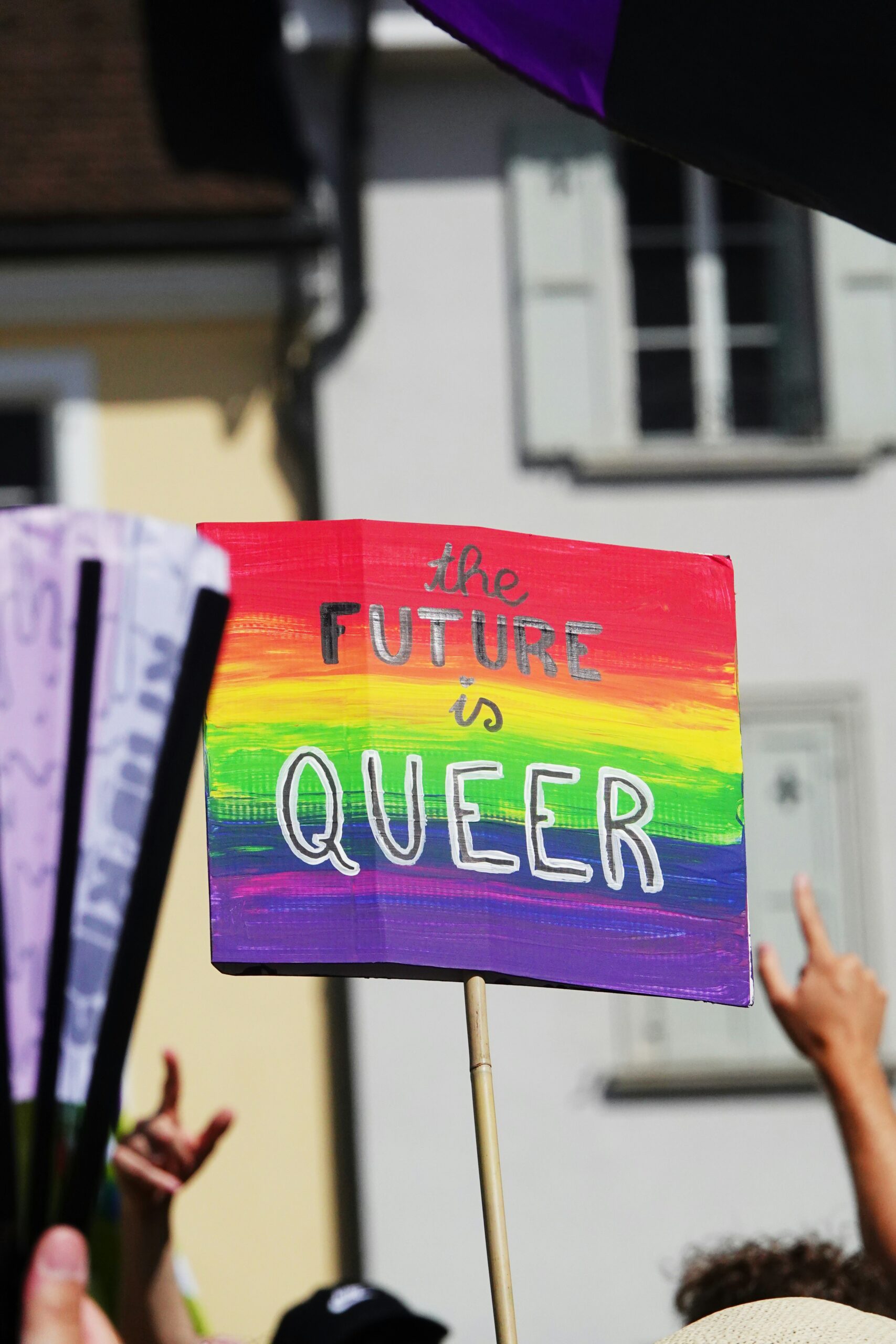
Protecting the Freedom to Vote with Pride in Florida
Voter ID laws are harming LGBTQ+ communities — but free ID & name change services are stepping in
A true democracy requires an electorate that looks like and represents all of us. This Pride Month and beyond, VoteRiders celebrates the historic electoral growth of LGBTQ+ voters across the country that has continually prevailed despite the barriers threatening to suppress their voices at the ballot box.
We work year-round with trusted partner organizations to equip LGBTQ+ communities nationwide with the ID documents and information they need to vote. Together we are helping to build a democracy that honors, protects, and uplifts every voice.
The LGBTQ+ community is one of the fastest-growing demographics in the United States. In fact, by 2040, one in five voters is projected to identify as LGBTQ+, and according to a Gallup Poll, nearly 10% of U.S. adults identify as LGBTQ+, representing approximately 20 million American voters. This expanding electoral power is also reflected in our government, where a record-breaking number of LGBTQ+ leaders were elected to public office across the country during the November 2024 federal election.
But as our LGBTQ+ communities prepare to wield their growing political power in the upcoming November 2026 midterms, waves of state and legislative attacks are threatening to undermine their right to cast their ballots safely and confidently.
Florida’s Legal Landscape is Changing
In recent years, policies targeting transgender and nonbinary Americans have been especially severe in Florida. This year, the state enacted the Florida SAVE Act (House Bill 991), which is a restrictive new law that will require voters to provide documents proving their citizenship (like a U.S. passport or birth certificate) if their citizenship cannot be confirmed through a government database.
Advocates are currently fighting the law in court. If it’s allowed to go into effect as scheduled on January 1, 2027, the new proof of citizenship requirement could disproportionately impact transgender Floridians. It will also impact Floridians who have legally changed their name but haven’t updated their original birth certificate or U.S. passport. If a voter flagged as a suspected non-citizen does not have a document proving their U.S. citizenship that matches their legal name, they could be removed from Florida’s voter rolls.
Research shows that at least 200,000 transgender voters nationwide don’t have an ID that matches their name and/or gender identity. This is largely due to systemic, bureaucratic, and financial barriers that make it challenging or even impossible to update them.
Florida’s new proof of citizenship requirement is part of a wave of new laws that have a disproportionate impact on transgender and nonbinary voters. In 2024, Florida’s Department of Motor Vehicles office stopped allowing gender marker changes on driver’s licenses and state IDs. Following this change, some Floridians even had the gender marker on their ID reverted to their sex assigned at birth. Then, in 2025, the U.S. State Department rolled back a national policy and stopped allowing gender marker changes on U.S. passports, and eliminated the “X” gender as an option entirely.
Because of these restrictions, there is currently no realistic way for Florida’s trans and nonbinary residents to obtain a government-issued identification that matches their gender identity or expression. And now, under Florida’s SAVE Act, the state is essentially punishing voters for not having an identity document that its own laws made impossible to obtain.
To address these escalating threats to voting rights, VoteRiders has partnered with the Gender Advancement Project (GAP) to make sure Central Florida’s trans and gender expansive communities have the information and hands-on support they need to vote safely and confidently despite an increasingly hostile environment. Our work together also helps highlight many stories of the impact ID laws and other forms of voter suppression have on the LGBTQ+ community.
Empowering Trans & Gender Expansive Voters with VoteRiders & the Gender Advancement Project
GAP was founded in 2020 during the height of the COVID-19 pandemic by Ashley Figueroa and Nikole Parker, two established leaders in Florida’s transgender community, who recognized a lack of trans-led representation among local organizations.
“We understood that there was really nothing that was led by and for the trans community at the time, “ Ashley told VoteRiders. “Trans people were mostly hired just to spearhead initiatives, and in reality, we were being told by cis-hetero or cis gay people what to do. We always say, ‘Who knows better than the trans community for the needs of the trans community?’”
Today, GAP offers an array of holistic programs aimed at advancing the rights, dignity, and well-being of trans and gender expansive individuals across Central Florida. This support includes connecting community members to free healthcare and offering pro-bono legal support for those facing discrimination in housing, public accommodations, and employment.
Of all of their critical initiatives, GAP’s Legal Name Change Program, which supports over 100 individuals through the legal name change process every year, is the largest and most popular. GAP’s hands-on assistance includes helping clients understand, complete, and file rigorous paperwork and accompanying them to appointments for fingerprinting and background checks.
Navigating the bureaucratic name-change process is half the battle. The other half is paying for it.
The total cost to legally change a name in Florida is between $450 and $600. The mandatory court filing fee alone is $401, an amount that would require nearly 29 hours of work for a Floridian earning minimum wage.
That’s where VoteRiders comes in. In 2025, VoteRiders teamed up with GAP to cover the steep financial costs associated with the name change process. VoteRiders’ Florida Organizer, Kristen Rodriguez, also helps individuals register to vote under their new name, update their birth certificates and Social Security cards, and secure an accepted ID for voting in Florida. VoteRiders’ support also includes setting up appointments at ID-issuing offices, arranging free, round-trip transportation to get people there, and requesting and paying for their ID documents.
Turning Advocacy Into Action at the Ballot Box
Rapid policy changes on both the state and federal levels in recent years have quickly turned legal advocacy into the second-largest area of GAP’s critical work.
At GAP, they advocate for and mobilize communities so their voices are heard. According to co-founder Ashley Figueroa, GAP does this work “through in-district office meetings, contacting legislators, going to the Florida state capitol in Tallahassee, in DC, and showing up to events.”
She also shared that they have a focus on educating communities on policy: “Because a lot of the bills and laws are hard for the everyday person to understand, we are a liaison between legislation and the community, and help people understand how policies affect them.”
When it comes to shaping policy, research shows that LGBTQ+ voters are deeply engaged in civic life and report very high intent to vote compared to non LGBTQ+ voters. A recent study by the Human Rights Campaign found that an overwhelming 92% of registered LGBTQ+ voters say they’re determined to vote in the upcoming November 2026 midterms, compared to only 68% of non-LGBTQ+ voters.
Ashley shared that she has seen a positive trend in community members recognizing the power of their vote.
The Human Rights Campaign found a broad range of issues motivating LGBTQ+ Americans to vote. Topics such as democracy and elections, economic stability, and LGBTQ+ rights and protections were consistently ranked “extremely” or “very important.” Registered voters in the community were also significantly more likely than their peers to express concerns over barriers to voting, with 87% citing voter ID requirements as a top concern.
Fighting Discrimination at the Polls & Beyond
A core component of VoteRiders’ work is educating Americans on their voting rights. This includes providing resources to voters in the 38 states with voter ID laws that explain voters’ right to cast a ballot if the required information on their ID (like their name) matches their voter registration information.
VoteRiders’ own Florida Organizer, Kristen Rodriguez, shared that her discussions in LGBTQ+ communities across the state center on LGBTQ+ voters’ rights at the polls and ways to advocate for them.
“They shouldn’t be turned away ever, and oftentimes pushing back and knowing how to navigate that conversation is all it takes to make sure they can cast their ballot.”
— Kristen Rodriguez, Florida Organizer at VoteRiders
While gender identity or expression does not impact an individual’s legal right to vote, voter ID laws and bans on updating identity documents can force trans and nonbinary voters to present an ID that doesn’t align with who they are, and which can lead to cruelty and mistreatment at the polls and may discourage voters from turning out.
“…[Some election administrators] let their personal biases come into play and refuse to acknowledge people by their affirmed name and gender identity. There’s a lot of transphobia, and people are afraid they’re going to get turned away at the polls because they look one way, but their ID documents reflect something else.”
In instances like this, GAP and VoteRiders refer voters to trusted partner organizations such as the National Election Protection Hotline and the Southern Legal Council for immediate legal assistance and representation.
Beyond voting, blocking transgender individuals from updating their identification can also create barriers to navigating other aspects of daily life.
“A lot of people don’t feel safe applying for jobs,” said Figueroa. “We’ve heard people being turned away and discriminated against before even getting an opportunity to apply for a job because their name and/or gender marker on their legal documents is different from how they identify. The hypervigilance that comes with all of that causes anxiety.”
Protecting the Freedom to Vote and Live with Pride
In the face of discriminatory, anti-democratic, and systemic barriers against trans and nonbinary Floridians, VoteRiders and the Gender Advancement Project are fighting back. By equipping voters with the ID they need to feel affirmed, validated, and respected at the ballot box, in schools and workplaces, and in every corner of daily life we’re helping communities vote and live their lives with pride.
“Having documents that validate your identity is one of the most important things in a trans person’s journey. “Once you have that, it’s like, finally, you can breathe. The support we provide with VoteRiders’ services is life-saving for so many people. It really goes a long way.”
— Ashley Figueroa, GAP co-founder
For more information on how you can work with VoteRiders to support and empower voters in your community, visit VoteRiders.org/partner.
Sources & Further Reading
- Gallup: LGBTQ+ Identification in U.S. Rises to 9.3%
- Human Rights Campaign: On National Voter Registration Day, Human Rights Campaign Foundation Report Finds More Than 95% of LGBTQ+ Adults are Registered to Vote, Nearly 75% are “Very” Motivated to Vote in 2024 Elections
- Human Rights Campaign: Equality Electorate: The Projected Growth of the LGBTQ+ Voting Bloc in Coming Years
- Human Rights Campaign: Political and Civic Engagement Among LGBTQ+ Voters
- NBC News: Florida bars transgender people from changing the sex on their driver’s licenses
- NPR: Trump’s passport policy leaves trans, intersex Americans in the lurch
- Politico: DeSantis signs Florida’s version of SAVE America Act, draws immediate lawsuit
- Eleventh Judicial Circuit of Florida: Instructions for filing an action for name change — Adult
