

Reclaiming the Freedom to Vote in Texas: Lonnie’s Story
Lonnie had gone nearly 20 years without a government-issued ID, and he was sick of feeling like he might never have what he needed to secure a job, apply for government assistance, or cast a ballot in Texas.
The past few years had been rocky. After being unhoused and unable to secure even a motel room without an ID, Lonnie was arrested and served two years in a Texas prison. While serving his sentence, he participated in what he described as an “unsuccessful” re-entry program. A coordinator started his ID application process. However, because Lonnie was born in Florida, where birth certificate requests can take a long time to process, he was released before any progress was made — a common roadblock that leaves many previously incarcerated Americans without an ID and therefore unable to access the basic resources needed to transition back into society.
Navigating Life After Prison Without ID
When Lonnie moved into a transitional facility in Fort Worth, Texas, he lost contact with the re-entry coordinator, and with that, his birth certificate application. He needed to secure a job and government assistance, but the only ID he had, his prison ID, wasn’t accepted. Because his movement was temporarily restricted while he was living at the transitional facility, Lonnie couldn’t simply walk into the Department of Public Safety (DPS) Office and get an ID on his own. Even if he could, he didn’t know how.
“I didn’t have any experience with re-entry stuff at all,” he explained. “I didn’t know how to go about it.”
How VoteRiders Helps Formerly Incarcerated People Get ID
When Lonnie spoke to his parole officer about his situation, they knew exactly who to connect him with — VoteRiders. At first, Lonnie was skeptical.
“Coming from the situations that I’ve come from, needing identification for re-entry into society but not getting it, I was kinda let down and not really knowing who to trust,” he explained. “But I was willing to try.”
VoteRiders assisted several other residents at his transitional facility, and Lonnie felt reassured after listening to some of their success stories. Once he started working with Cecile, a VoteRiders volunteer, he began to feel, for the first time in a long time, that this might actually happen — he might finally get the ID he needed to rebuild his life.
First, Cecile helped Lonnie request and pay for a copy of his birth certificate. There was no time to waste. Lonnie was scheduled to be discharged from the transitional facility in two months. If he didn’t receive his birth certificate in time, he wouldn’t have a government-issued ID to secure a job or stable housing.
Thankfully, Lonnie’s birth certificate arrived in the mail one month later.
With his birth certificate squared away, Cecile helped Lonnie figure out what other documents he needed to apply for his ID, like proof of residency and his school transcripts. Then, she scheduled him an expedited appointment at his local DPS office, paid the ID fee, and arranged a free Lyft ride to take him there and back. Lonnie was grateful for the one-on-one support.
“I needed somebody to hold my hand through it because I didn’t know anything about this at all.”
Overcoming ID Barriers
For a brief moment, Lonnie finally felt close to securing his first official Texas state ID. But then, more disappointment hit.
Because his appointment was scheduled for Juneteenth, a federal holiday, a staff member at his transitional facility incorrectly assumed his local DPS would be closed and refused to let him leave, even though his Lyft had already arrived.
Oh no, Lonnie thought. Not again. But he quickly called Cecile to explain. She assured him it was no problem — she would reschedule his appointment.
A week later, Lonnie was in a Lyft, heading to the DPS.
“I almost pinched myself to make sure that this was really happening,” he said.
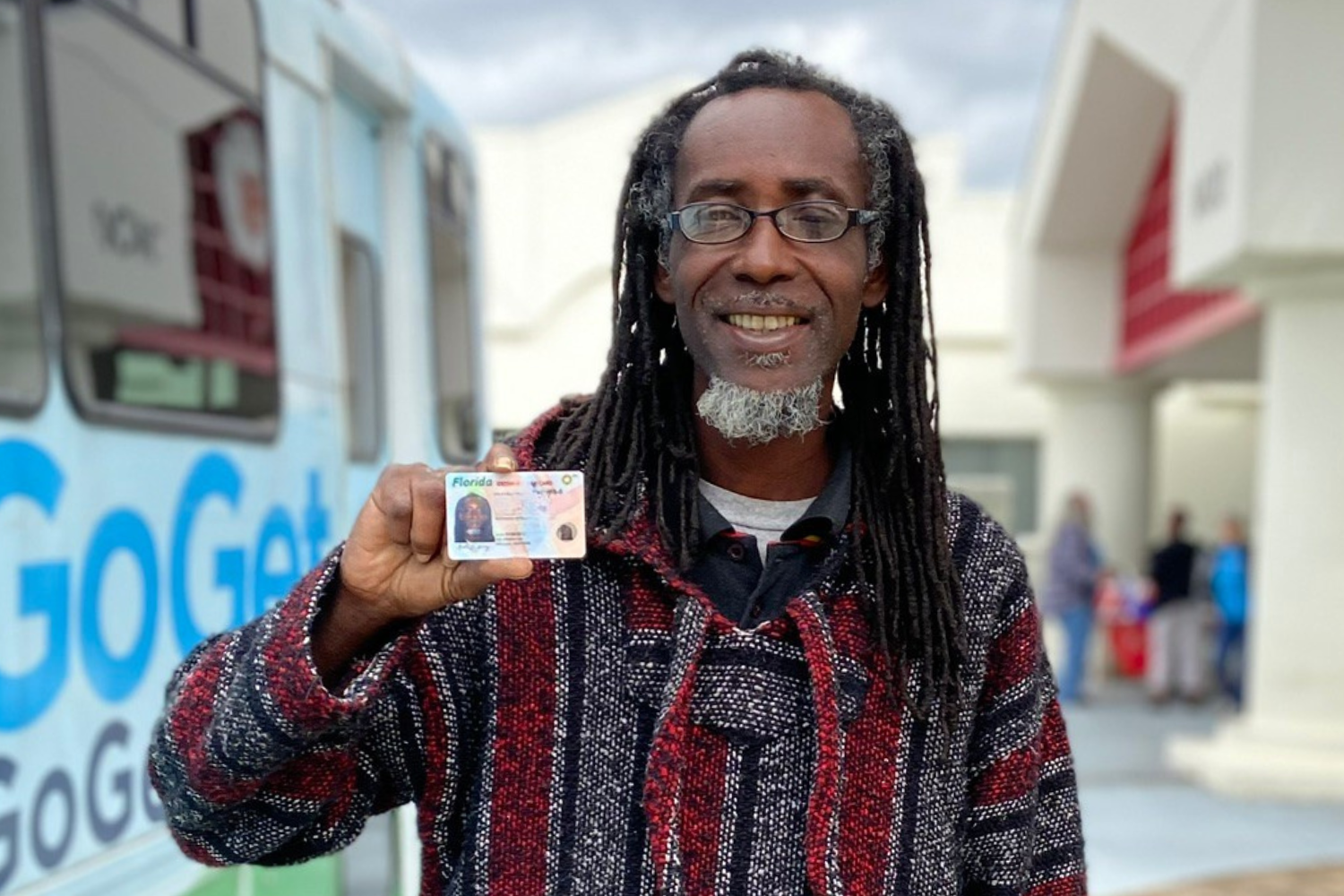
A few hours later, Lonnie left the DPS holding a paper copy of his Texas state ID. “There’s a lot to do in getting these things done,” Lonnie said. “And VoteRiders does it so well.”
“You can train anybody to do things, but to do it with compassion and heart like y’all did — it’s unfamiliar in the society we live in today to feel that kind of compassion from somebody you met over the phone. You’re used to it being so quick and people hanging up, putting you aside, but not with y’all — not with VoteRiders.”
Reclaiming His Right to Vote in Texas
Lonnie was discharged from parole in October with the ID he needed to restore his government assistance benefits, secure employment and housing, and make his voice heard at the polls in the 2026 midterm election.
Before serving his sentence, Lonnie voted regularly. After he was incarcerated, however, he thought he’d never be able to vote again. Cecile reassured him that in Texas, people with felony convictions automatically regain the right to vote after their parole is complete.
“I come from a political family,” Lonnie explained. “My father, may he rest in heaven, would be so ecstatic if he knew I was trying to get that part of my life back because your vote does make a big difference. I voted up until the day I couldn’t anymore.”
Thanks to VoteRiders, that day came once again.
Interested in sharing a story of how voter ID and/or documentary proof of citizenship laws have affected you, someone you know, or a community you support? Email us at [email protected].
