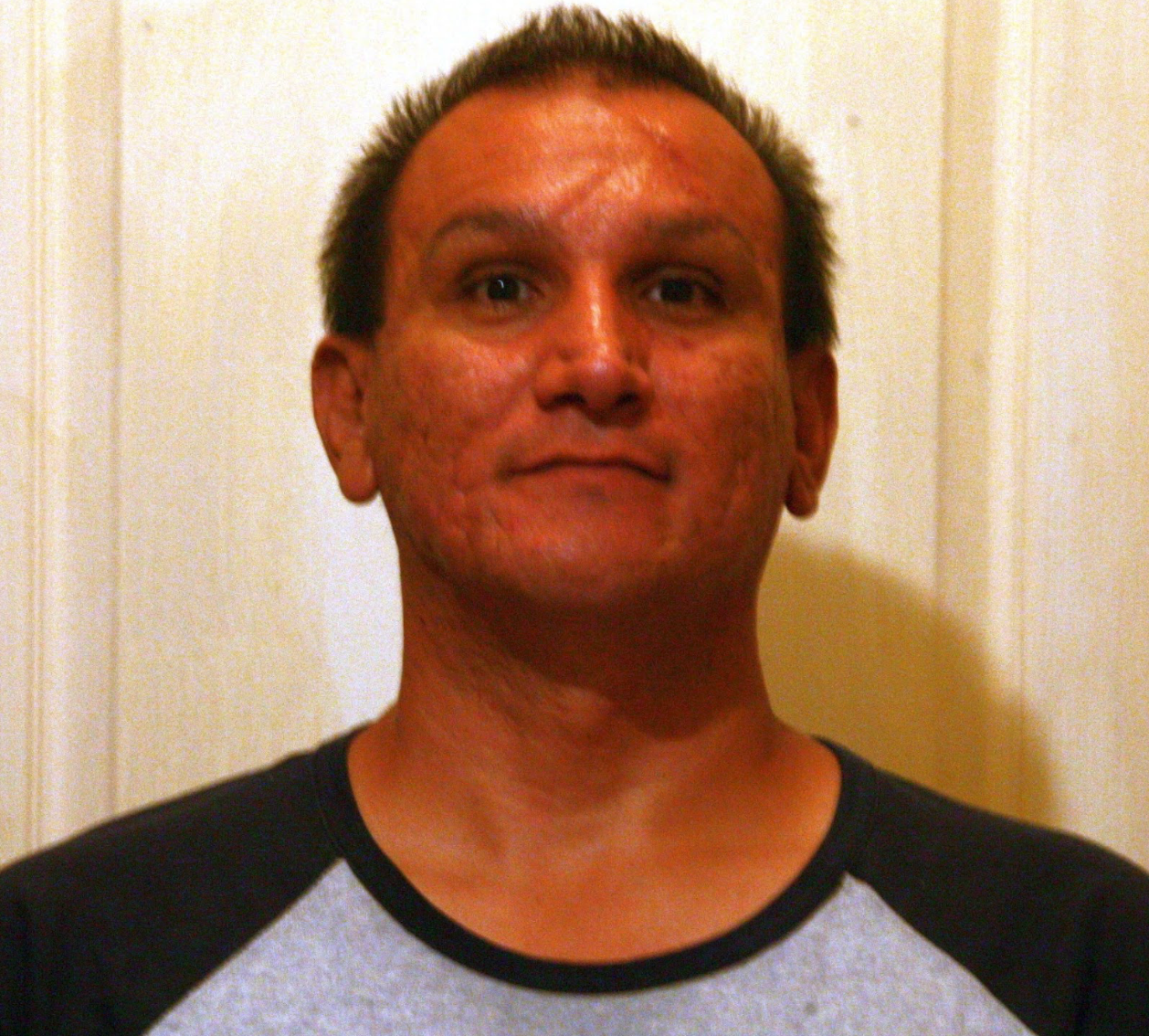
Navigating ID Requirements as a Native Voter: David’s Story
David needed a new job, but first, he needed a new Arizona ID, and getting one was not going to be easy.
Many people mistakenly think that getting an ID is straightforward, but for David and millions of other underserved Americans, paying for an ID isn’t possible when that money is required to keep food on the table, a roof over their heads, and meet other basic needs.
David was stuck in a catch-22 that far too many Americans face. He needed a new ID to get a job, but he needed a new job to pay for it. In other words, he was trapped.
Finding VoteRiders at a Public Library
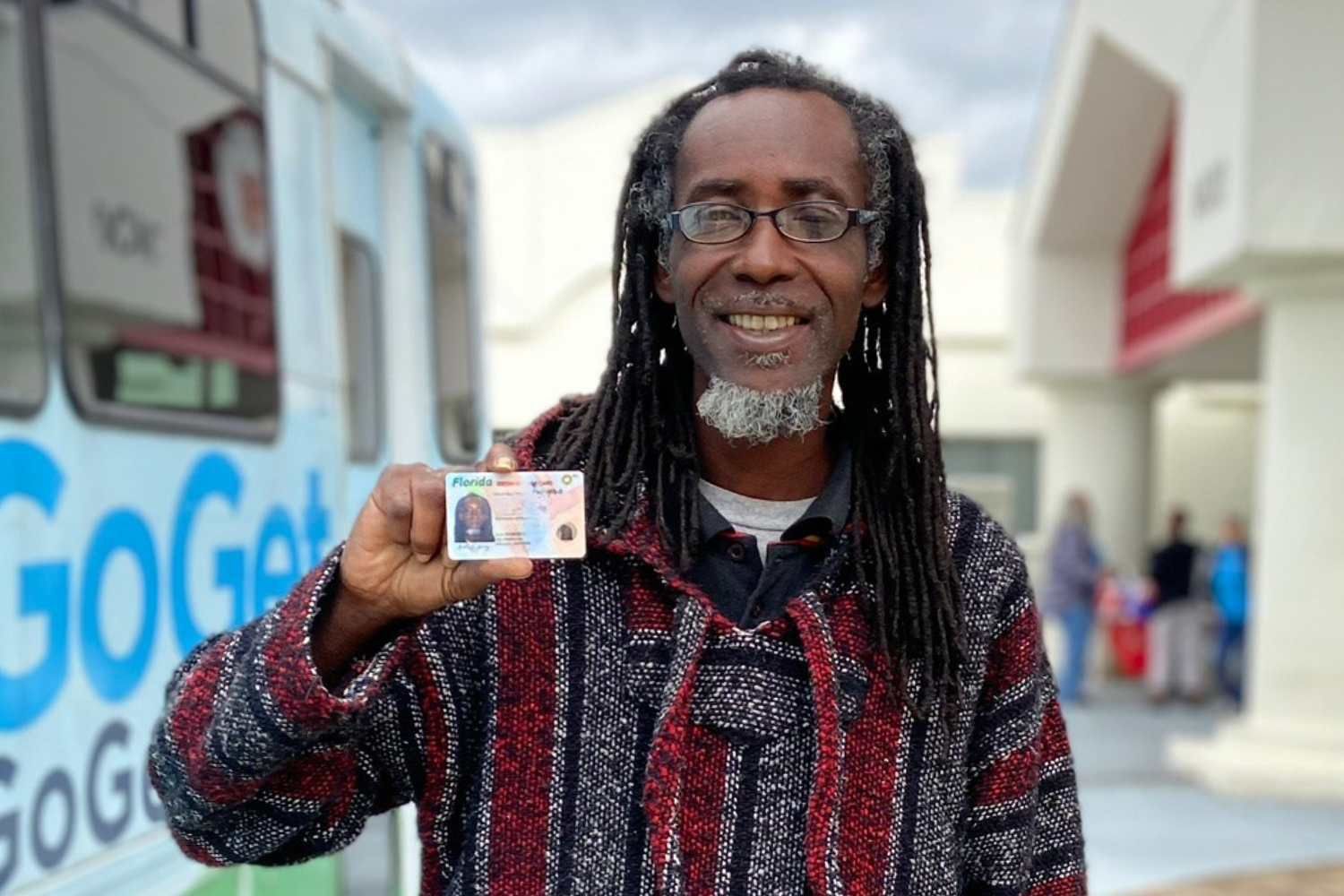
Luckily for David, one day a large sign at Eckstrom-Columbus Library in Tucson caught his attention: “Do you need an ID?” He immediately approached the person sitting at the table next to it, and within a few minutes, he had found his way out of the trap: VoteRiders was going to help him get an Arizona ID for free.
Since David already had his birth certificate and Social Security card, securing his Arizona State ID was relatively straightforward. VoteRiders scheduled an appointment for him at his local Motor Vehicle Division, provided him with a voucher to cover the ID fee, and arranged a round-trip ride to get him there and back.
“I haven’t been able to find work — I haven’t had access to the funding it takes to get this ID,” David explained. “When you have a hand-to-mouth existence, pulling change from your couch…this ID help was such a blessing.”
Reconnecting with Culture, Community, and the Ballot Box
Having a current, state-issued ID also gives David a sense of security and safety. As a Native American from the Tohono O’odham Nation, David had previously been stopped by legal authorities and questioned about his identity while on the reservation. The traditional lands and membership of the Tohono O’odham Nation span both the United States and Mexico, making it a binational community. In the past, David crossed the US-Mexico border to visit friends and family, attend ceremonies, and access sacred sites. But because of crackdowns on border enforcement, David hadn’t had the ID he needed to be able to travel to see many of his loved ones for twenty-seven years.
Fortunately, after working with VoteRiders to finally obtain his Arizona ID, all of that changed. David can now apply for a passport, is planning to reunite with his community, and will even be able to visit the Mexican consulate to petition for dual citizenship.
“I can participate in ceremony and song and dance, I can rekindle old family friendships and bonds that were there in place before.”
Having an ID also means David can vote with confidence on issues that matter to him and his community. In March 2026, Pima County held a special election for the Regional Transportation Authority, and David’s vote helped pass a twenty-year plan to fund regional transportation. “The need for this is so great,” he explained. “The roads are so bad, and I ride the bus.”
“Voting locally means everything to me. Being Native American, we weren’t even US citizens until after World War II, after other groups already had this privilege. I still vote because this is all we have. People in my community may see me as conformist, but it’s the only way to be heard.”
Overcoming Systemic Barriers for Native Voters
Native voters often face unique barriers to the ballot box — like living miles away from polling locations, not having a traditional street address for voter registration, or being less likely to have a birth certificate if born on a reservation. Yet, despite these obstacles, the Native vote has had substantial electoral power in Arizona, which has frequently shifted the balance of political power in many tight races in recent years.
Although Arizona accepts IDs issued by a federally recognized Tribe or the Bureau of Indian Affairs, many Native voters are often wrongly told by poll workers that their Tribal ID cannot be used to vote, which is what happened to David.
“My Tribal ID is a federally issued document,” he explained. “So, it should be respected. I should be acknowledged…When you’re like a second-hand citizen, being a Tribal member, everything is just that much more complicated. The effects are compounded, socially, fiscally, vocationally, you name it. Just having an [Arizona state] ID has been a blessing.”
The 2026 midterm elections are around the corner, and David now has the ID he needs to cast his ballot with confidence.
Interested in sharing a story of how voter ID and/or documentary proof of citizenship laws have affected you, someone you know, or a community you support? Email us at [email protected].
