The Hidden Cost of Voter ID Laws
This election season, voters in seven states will decide whether to pass new or stricter voter ID laws.
Voter ID laws may seem like a common-sense, neutral standard. But in practice, these laws create barriers for eligible voters, making it harder and more confusing to exercise their fundamental right to vote.
What Are Voter ID Laws?
Voter ID laws request or require that voters show identification to vote. Voter ID laws are not the same as voter registration. During voter registration, voters are added to their state’s official list of eligible voters.
When they register, each voter must swear to their citizenship, identity, and residency. There are severe criminal penalties for misrepresenting any of this information.
Because the government already verifies this information during registration, voter ID laws add redundant steps to check voters’ IDs at the polls or when they vote by mail.
Voter ID laws are unnecessary, and yet 38 states have some form of voter ID law. More states could add new ones after the 2026 midterm election.
How Much Do Voter ID Laws Cost?
The short answer is that states spend a lot of money to implement voter ID laws, especially when they’re new. Voter ID laws require changing election processes, redrafting ballots, and training poll workers across the state.
This all adds up.
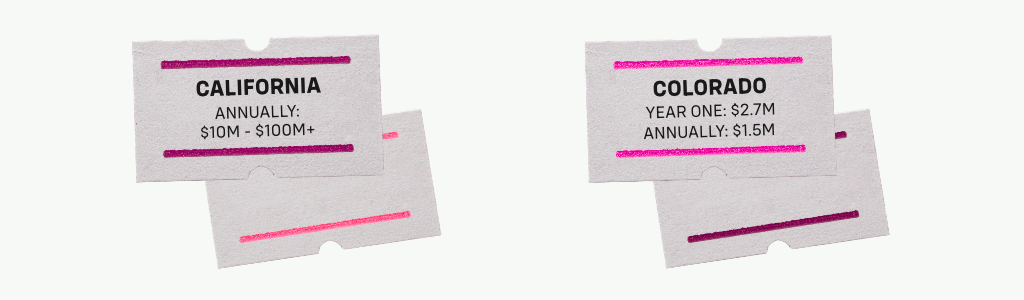
Two 2026 ballot measures show how high these costs can be:
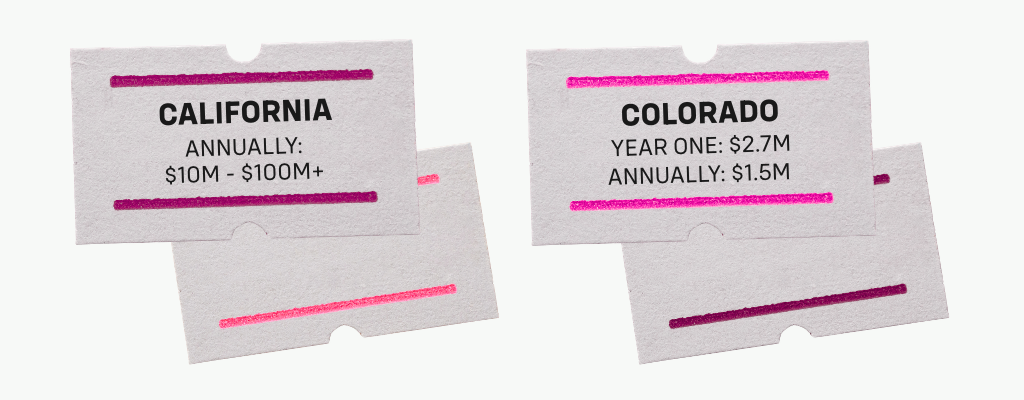
California Proposition 39
Prop 39 would require Californians to provide ID in future elections. According to the state legislature’s nonpartisan fiscal and policy advisor, this would cost the state and local governments “tens of millions of dollars to low hundreds of millions of dollars” every year.
Colorado Amendment 84
Amendment 84 would require Colorado voters to provide ID numbers when voting by mail. If passed, it is projected to cost $2.7 million in the first year and $1.5 million each year after that.
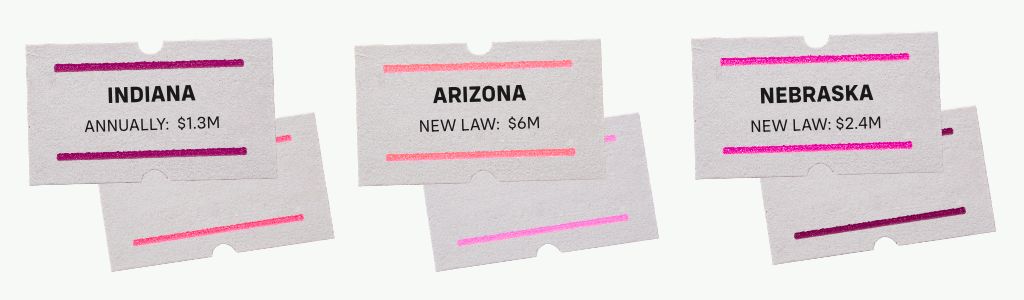
These recent examples fit a long-standing trend when it comes to the cost of voter ID:
Indiana (2005)
When Indiana passed one of the nation’s first strict photo ID laws, an analysis projected it would cost the state government $700,000 annually (equivalent to around $1.3 million in 2026).
Indiana’s voter ID law required the state to provide free IDs. To pay for them, Indiana moved money out of other vital government programs, like the Motor Vehicle Technology Fund and the Anti-Terrorism Fund. Funding for these essential services was cut to foot the bill for voter ID.
Arizona (2022)
Arizona’s state legislature allocated $6 million in government funding to make its ID laws stricter in 2022.
Nebraska (2023)
An analysis found the new photo ID law would cost the state at least $551,000 in lost revenue from providing free IDs. It would also cost $1.8 million to update election processes and educate the public about the new law.
Who Pays for Voter ID Laws?
You do. Taxpayers pay for voter ID laws.
Voter ID laws cost states in many different ways:
- New and Additional Spending: States must pay to update voting systems, design new ballots, hire more election workers, process provisional ballots during the cure period, and run public education campaigns about changes to the law.
- Lost Revenue: If a state is required to issue free IDs, it gives up the fees it would normally collect.
At the end of the day, every dollar spent on voter ID laws is money that came from everyday Americans – taxpayers.
This is a real harm of voter ID laws: not only do they increase confusion and block eligible voters from the ballot box, but they also suck up limited state resources that could be allocated elsewhere.