This guide gives information, not legal advice.
Why People Change Their Name
People change their name for many reasons. Some common ones:
- They get married or divorced.
- They want a name that fits who they are.
- They want a simpler name or a new spelling.
What is a Legal Name Change?
A legal name change is making a new name your official, legal name. You can do this by getting a court order, by getting married, or by getting divorced.
Changing your legal name has two main steps:
1. Get official proof of your name change. The document you need depends on how you change you name.
2. Update your name everywhere. Use this proof to change the name on your ID and records, one by one.
Name Change via Court Order
For name changes not related to marriage or divorce, you ask a court to approve your new name. This usually takes about 2 to 3 months, but that varies by location.
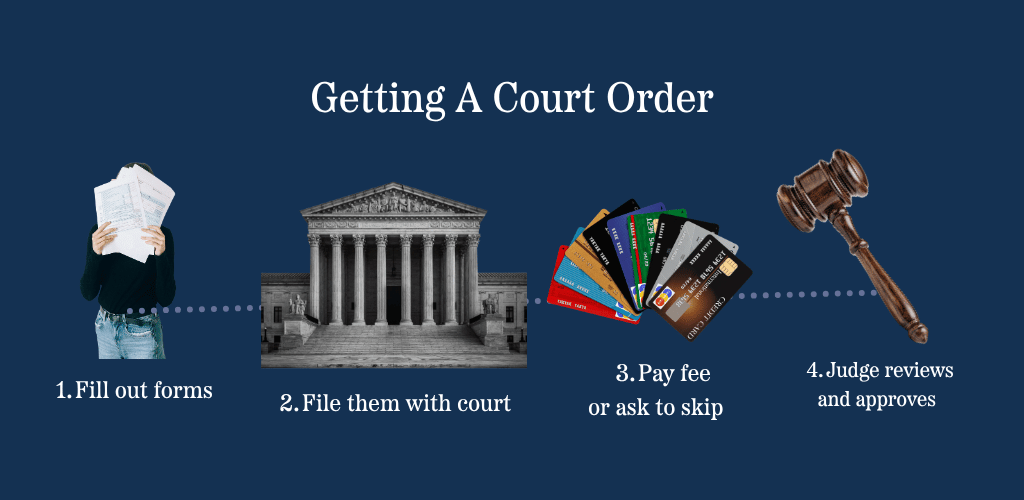
You do not have to give a long reason for legally changing your name. In most states, you just need to show the change is not to hide from debt, fraud, or the law.
The court will give you a document (called a court order) that says your new name is now your legal name.
You can then use this court order to change your name on your ID, birth certificate, voter registration, and more.
Name Change via Marriage or Divorce
If you are changing your name due to marriage or divorce, you do not typically need to go through the process of getting a court order.
Instead, you can use your marriage certificate or divorce documents (usually called a decree or certificate) as proof of your legal name change when you update your ID and other records.
Helpful Notes
This guide is for everyone. In a few places, the steps are different for people changing their name due to a gender transition.
This information is marked with: 
There is a recommended order for updating your name on ID documents and records.
Following this order will make the process as easy as possible. See the “Updating Key Documents” section of this guide for more information.
Get more than one copy of your court order.
Ask the court for 2-3 certified copies (official stamped copies) of your court order. You will need them for updating important ID documents.
Court orders do not expire.
If you need another copy in the future, you can ask the same court for a new one.
You do not (and cannot!) fix everything at once.
It is okay if some IDs still have your old name while you work on updating them. Your name-change documents prove both names belong to you.
